


CATZ COCKTAILS
That’s why we’ve crafted unique cocktails with the same dedication that goes into every bottle. Recipes that let CATZ’s rich, spicy heart shine through. No quick mixes—just combinations born from hours of tasting, fine-tuning, and a love for balance. From refreshing takes on timeless classics to unexpected, modern creations that surprise and linger. Each glass is a tribute to the botanicals we’ve carefully selected, to the time we put into them, and to the pure, artisanal spirit of CATZ. Small, thoughtfully crafted, and made with heart—just like the gin itself. Let yourself be inspired. Taste the difference.


The Angel Face Cocktail is a classic cocktail from the days of Prohibition in the United States. The recipe was first recorded in the 1930 “Savoy Cocktail Book” written by Harry Craddock. The cocktail is believed to be named after a famous criminal or mysterious bartender with an angelic face. With its combination of gin, apricot brandy and calvados, the Angel Face offers a rich and fruity taste with a subtle complexity.
Ingredients
- 30 ml CATZ Dry Gin
- 30 ml Apricot Brandy
- 30 ml Calvados
Method
Pour all ingredients into a cocktail shaker filled with ice cubes.
Shake vigorously and strain into a chilled cocktail glass.
Garnish
Serve without garnish.

The Aviation Cocktail is a classic gin cocktail that dates back to the early 20th century. The recipe was first published in 1916 by Hugo Ensslin, a bartender at the Hotel Wallick in New York, in his book Recipes for Mixed Drinks. The name “Aviation” refers to the light blue hue the cocktail originally had, thanks to the addition of Crème de Violette, reminiscent of the sky and the early days of aviation.
In later years, Crème de Violette was often omitted from the recipe, causing the cocktail to lose its distinctive color. With the revival of classic cocktails in the 21st century, Aviation has regained its original recipe and popularity.
Ingredients
- 45 ml CATZ Dry Gin
- 15 ml Maraschino
- 15 ml Fresh lemon juice
- 1 bar spoon of Creme de Violette
Method
Pour all ingredients into a cocktail shaker filled with ice cubes.
Shake vigorously and strain into a chilled cocktail glass.
Garnish
Maraschino cherry.

The Bee’s Knees cocktail comes from the 1920s, during Prohibition, when people made cocktails to mask the poor quality of illegal alcohol. The drink consists of gin, lemon juice and honey, which softened the sharp taste of the gin. The name “Bee’s Knees” was a slang term meaning “awesome.” Although the drink temporarily went out of fashion, the Bee’s Knees has become popular again in recent years.
Ingredients
- 50 ml CATZ Dry Gin
- 20 ml Fresh orange juice
- 20 ml Fresh lemon juice
- 2 bar spoons of Honey
Method
Stir the honey together with the juices until the honey is dissolved. Pour in the gin and shake vigorously with ice and strain into a chilled cocktail glass.
Garnish
lemon peel

The Bramble cocktail was created in 1984 by Dick Bradsell, one of Britain’s best-known bartenders, at Fred’s Club in London. He wanted to create a drink that reflected the flavors and aromas of the English countryside. The addition of Crème de Mûre provided a unique twist on a classic gin cocktail. Since then, the Bramble has become a favorite in cocktail bars worldwide.
Ingredients
- 50 ml CATZ Dry Gin
- 25 ml Fresh lemon juice
- 12.5 ml Sugar syrup
- 15 ml Crème de Mûre (blackberry liqueur)
Method
Place all ingredients, except the Crème de Mûre, in a cocktail shaker. Shake well with ice and strain the mix into a chilled old fashioned glass filled with crushed ice. Then pour the Crème de Mûre in a circular motion over the top of the cocktail.
Garnish
Optionally, garnish with a slice of lemon and a few fresh blackberries.

The Cardinale cocktail was first created in the 1930s. The cocktail was first created at the Hotel Excelsior in Rome, a prestigious hotel on Via Veneto that was a popular spot for celebrities, politicians and clergy in the years following World War II. The cocktail is said to have been invented by the hotel’s head bartender for a high-ranking cardinal of the Vatican. Cardinale consists of gin, dry white vermouth and Campari, and it has a rich, complex flavor. It was inspired by the rich colors of the cardinal (the cardinal red) and his position in the ecclesiastical hierarchy. Although it is not as well known as other classic cocktails, it remains a sophisticated choice for lovers of gin and vermouth.
Ingredients
- 40 ml CATZ Dry Gin
- 20 ml Dry white Vermouth
- 10 ml of Campari
Method
Place all ingredients in a mixing glass and stir well for proper dilution. Strain into a chilled cocktail glass
Garnish
lemon peel

The Clover Club cocktail originated in the late 19th century and was named after the exclusive Clover Club in Philadelphia, where lawyers, writers and businessmen gathered. The cocktail, a mix of gin, raspberry syrup, lemon juice and egg white, became popular for its silky smooth texture and fresh, fruity taste. Although it fell into oblivion for a time, the Clover Club has made a strong comeback in modern cocktail culture.
Ingredients
- 45 ml CATZ Dry Gin
- 15 ml Raspberry syrup
- 15 ml Fresh lemon juice
- 3 drops of protein or protein substitute
Method
Pour all ingredients into a cocktail shaker filled with ice cubes.
Shake vigorously and strain into a chilled cocktail glass.
Garnish
Fresh raspberries

First published in The Savoy Cocktail Book (1930), Corpse Reviver No. 2 was originally intended as an invigorating hangover remedy. But don’t let the name fool you: this cocktail is all about refinement. Fresh citrus, subtle sweetness and a whisper of absinthe – a bold balance that only CATZ Dry Gin truly knows how to carry.
Ingredients
- 30 ml CATZ Dry Gin
- 30 ml of Cointreau
- 30 ml of Lillet Blanc
- 30 ml Fresh lemon juice
- 1 drop of Absinthe
Method
Shake all ingredients with ice and strain into a chilled cocktail glass.
Garnish
An orange peel

The Dry Martini saw the light of day at the beginning of the 20th century as a refined evolution of early gin-with-vermouth blends. What once began as the slightly sweet Martinez in California around 1860 gradually became “drier” in New York and London: less and less vermouth, more and more emphasis on the pure, botanical power of gin. During the Roaring Twenties and the American Prohibition, the Martini grew to become the symbol of clandestine glamour; bartenders perfected the crystal-clear, ice-cold stirred variety we know today.
In the decades that followed, the cocktail crowned itself a favorite of writers (Hemingway, Dorothy Parker), spies and style icons. Winston Churchill reportedly would only glance toward a bottle of vermouth while stirring his gin; Franklin D.Roosevelt used the Dry Martini to celebrate the end of Prohibition; and James Bond made “shaken, not stirred” a pop culture catchphrase (though purists swear by gentle stirring to keep the drink crystal clear).
With an icon that leans so heavily on precision, character is everything. CATZ Dry Gin – rich, balanced and powerful – effortlessly takes center stage in this minimalist classic, holding up all its layered botanicals despite the tiny hint of vermouth.
Ingredients
- 70 ml CATZ Dry Gin
- 10 ml Dry Vermouth
Gently stir all the ingredients with ice.
Strain into a pre-chilled martini glass.
Garnish
Squeeze a lemon peel over the glass – or drop a green olive, if you opt for the traditional approach.

In a city that never lost its elegance, even during World War I, a cocktail was born in a bar on Rue Daunou that commands respect to this day.
The place: Harry’s New York Bar in Paris.
The time: 1915, in the shadow of the front lines.
The mission: to create something as festive as champagne, but with the immediate impact of a grenade.
The result became the French 75, named after the French army’s legendary 75mm field gun. Light-footed in appearance, but nothing short of explosive in effect. A cocktail for those who don’t confuse style with weakness.
To stand up next to lemon and champagne, a gin needs character. CATZ Dry Gin, with its 48.2% and rich botanical backbone, adds depth and strength to this classic recipe. Not a bland gin with bubbles, but a cocktail with construction and bite.
Ingredients
- 30 ml CATZ Dry Gin
- 15 ml Fresh lemon juice
- 15 ml Sugar syrup
- 60 ml Campaign
Shake gin, lemon juice and sugar syrup vigorously with ice. Strain into a chilled champagne glass; a champagne coupe for flair, a flûte for finesse. Top with ice-cold brut champagne.
Garnish
Squeeze some lemon zest over the glass
No garnish needed: the French 75 speaks for itself.

The Gin Basil Smash is a relatively young but now iconic cocktail that originated in Germany. The cocktail was conceived in 2008 by Jörg Meyer, a well-known German bartender and owner of Le Lion – Bar de Paris in Hamburg. The bar is internationally known as one of the leading cocktail bars in Europe.
Jörg Meyer was inspired by the classic Whiskey Smash, a cocktail from the 19th century in which whiskey, mint, lemon and sugar are crushed (or “smashed”) to create a fresh, spicy flavor. Meyer experimented with basil instead of mint and gin instead of whiskey, creating the Gin Basil Smash.
The cocktail quickly became popular, thanks in part to social media and blogs. Its vibrant green color, intense scent of fresh basil and fresh taste caught the eye of bartenders and guests worldwide. Within a short time, it was a modern classic.
Ingredients
- 60 ml CATZ Dry Gin
- 22.5 ml Fresh lemon juice
- 22.5 ml Sugar syrup
- 10 basil leaves
Muddle the basil first and then shake the gin, lemon juice and sugar syrup vigorously with ice.
Strain into a chilled cocktail glass
Garnish
None.

In the world of mixology, few moments mark a bartender’s career as much as the NBC Dutch Championship. In 2022, amid the brass twinkling of shakers and the silence before applause, Nick Vrielink stepped behind the bar with quiet confidence during the Dutch Bartenders Club NK finals, a bottle of CATZ Dry Gin in hand.
The cocktai he created that day was more than a cocktail. It was an expression. A layered composition of powerful botanicals, fragrant finesse and fresh acidity. He called it Essence No. 5.
Built around the powerful, spicy and citrusy character of CATZ Dry Gin, Nick’s creation played with the delicate tension between classic and modern. Rhubarb, vanilla and lime gave the drink its sharpness. White Peach & Jasmine soda lifted it. A spray of orange blossom and a garnish of lemongrass and an edible flower sealed its aromatic identity.
The original contest recipe from 2022:
- 40 ml CATZ Dry Gin
- 10 ml De Kuyper Sour Rhubarb
- 20 ml fresh lime juice
- 10 ml Mathieu Teisseire vanilla syrup
- 100 ml London Essence White Peach & Jasmine Soda
- Orange blossom spray
It was a cocktail that did not whisper. It spoke, clear, elegant and powerful. It earned him the title of Dutch Champion.
Today, Essence No.5 is still on the menu at Fitz’s Bar, in the luxury of Pillows Maurits at the Park in Amsterdam. Over time, as befits a masterpiece, the recipe has evolved. But the essence, the CATZ essence, has remained.
Current recipe:
- 40 ml CATZ Dry Gin
- 20 ml Quaglia Rabarbaro
- 5 ml Quaglia Rose
- 20 ml Champagne acid
- 10 ml of vanilla syrup
- 100 ml London Essence White Peach & Jasmine Soda
- Orange blossom spray
Shake all ingredients vigorously with ice. and then top up with the soda
Strain into a chilled highball glass with ice.
Garnish
Lime grass and an edible flower.

The Gin Fizz is a refreshing classic that originated in the latter half of the 19th century. The first documented recipe appeared in Jerry Thomas’ 1876 Bartenders Guide, which described it as a variation on the traditional fizz-style of cocktails, a family of drinks characterized by adding sparkling water to an acidic base.
Gin Fizz was particularly popular in the United States at the beginning of the 20th century and became especially famous in New Orleans, where it was often served as a brunch cocktail. Its simplicity, fresh taste and light effervescence made it a popular choice for any time of day.
Unlike its more luxurious cousin, the Ramos Gin Fizz, which also contains cream and egg whites, the classic Gin Fizz is pure, light and thirst-quenching. Its timeless character has ensured that it can still be found in abundance in bars and cocktail menus today.
Ingredients
- 45 ml CATZ Dry Gin
- 30 ml fresh lemon juice
- 10 ml sugar syrup
- 50 ml of soda water
Method
Add gin, lemon juice, and simple syrup to a cocktail shaker with ice
Shake vigorously until well chilled
Strain into a short long drink glass without ice
Top with soda water
Garnish
. Optional: a slice of lemon or a thin strip of lemon zest

The Hanky Panky is an iconic gin cocktail created around 1903 by Ada Coleman, one of the first female bartenders at the famous American Bar in London’s Savoy Hotel. She developed the cocktail at the request of actor Charles Hawtrey, who asked for a drink with “a little punch.” Ada presented him with a new creation that he liked so much that he exclaimed, “By Jove! That is the real hanky-panky!”—and the name was born.
The cocktail is a clever balance between strength and subtlety, with gin as a solid base, sweet vermouth for depth and a dash of Fernet-Branca for spicy, bitter complexity. The Hanky Panky is a textbook example of how a small ingredient can have a big impact.
Today, the cocktail is considered a timeless masterpiece and a tribute to Ada Coleman’s contribution to classic cocktail culture.
Ingredients
- 45 ml Catz Dry Gin
- 45 ml red vermouth
- 2 dashes of Fernet-Branca
Method
Add all the ingredients to a mixing glass with ice.
Stir well until the cocktail is well chilled.
Strain into a chilled cocktail glass
Garnish
, Orange Zest

The Amethyst is an exclusive champagne cocktail developed for the two-star restaurant GEM of chef Soenil Bahadoer. The creation was served during the press day at the festive opening of the restaurant in Gemert. The name Amethyst refers not only to the gemstone – a symbol of luxury, sophistication and spiritual power – but also to the deep, dark purple color of the cocktail, which sparkles like a liquid jewel in the glass. A subtle reference to the restaurant’s name: GEM.
The Amethist combines the spicy intensity of CATZ Dry Gin with fresh, floral, and citrusy notes. The lemongrass liqueur plays a special role; it is infused with butterfly pea flower, which gives the drink its deep color. This infusion is carefully prepared in a sous-vide bath:
. Five grams of butterfly pea are added to 100 ml of lemongrass liqueur, then heated at 50 °C for 3 hours and filtered through cheesecloth for a clear, pure extraction.
The result is a cocktail that exudes elegance and balance, finely finished with Bollinger Brut and complemented by a lime-grass-flavored scented bubble from the Flavour Blaster – a multi-sensory experience perfectly suited to the culinary level of restaurant GEM.
Ingredients
- 20 ml CATZ Dry Gin
- 10 ml lemongrass liqueur (infused with butterfly pea)
- 5 ml Limoncello
- 5 ml yuzu juice
- 3 dashes of CATZ Revivel Bitters
- 3 dashes of saline solution
- 80 ml Bollinger Brut Champagne
Method
Stir all ingredients with ice in a mixing glass
Strain into a chilled champagne coupe
Top off with Bollinger Brut
Garnish
A scent bubble filled with lemongrass aroma via the Flavour Blaster

The John Collins finds its roots in the bustling London of the early 19th century, a time when flavors were as vibrant and surprising as the botanicals in a good glass of gin. The cocktail is named after a bartender, John Collins, who worked in a popular bar called Limmer’s Old House. He mixed a simple but refreshing long drink of gin, fresh lemon juice, sugar and sparkling water. Perfect for quenching thirst after a day of adventure.
Interestingly, the John Collins is often confused with the Tom Collins, a cocktail that became popular during the same period. Whereas the Tom Collins often used London dry gin, John Collins sometimes used older gin-like gins. This actually makes the John Collins a precursor to many of the fresh, botanical long drinks we so appreciate today.
So basically, the John Collins is a cocktail that captures the best of both worlds: the classic British gin tradition as well as the modern love of fresh, botanical flavors; just the way Catz Gin brings it now
Ingredients
- 45 ml CATZ Dry Gin
- 30 ml Fresh lemon juice
- 15 ml Sugar syrup
- 80 ml Soda Water
Method
Pour all ingredients into an ice-filled long drink glass and stir.
Garnish
Lemon wedge and a Maraschino cherry.

The AlbertoMartini first appeared in 1937, tucked among the pages of the Café Royal Cocktail Book in London. Created in an era of elegance and experimentation, this forgotten gem was named after the Martini, but given a dry, citrusy twist.
Instead of just vermouth, the Alberto combines fresh fino sherry with orange liqueur, resulting in a layered, corky cocktail with just a hint of sweetness. It’s not your classic Martini. It’s more sophisticated, more intriguing.
With CATZ Dry Gin as its base, the Alberto Martini becomes a bold revival: rich in botanicals, elegant in structure and undeniably complex.
Ingredients
- 30 ml CATZ Dry Gin
- 30 ml Dry Vermouth
- 25 ml Fino Sherry
- 10 ml Triple Sec
Method
Stir all the ingredients with ice until they are well chilled.
Strain into a chilled Nick & Nora glass.
Garnish
Orange peel.

Often referred to as Mexico’s most beloved cocktail, the Paloma originated in the hot cantinas of Jalisco. Traditionally prepared with tequila, grapefruit soda and lime, it symbolizes freshness, clarity and the perfect balance between sweet and sour.
At CATZ Dry Gin, we believe that heritage and innovation go hand in hand. By replacing tequila with our refined Dutch gin, the Paloma takes on a new dimension: elegant, refreshing and layered with botanicals that take citrus notes to the next level.
Ingredients
- 40 ml CATZ Dry Gin
- 20 ml freshly squeezed grapefruit juice
- 10 ml agave syrup
- 3 drops of saline solution
- 150 ml Premium grapefruit soda
Method
Fill a highball glass with ice. Add CATZ Dry Gin and the remaining ingredients. Top with grapefruit soda and stir gently.
Garnish
A wedge of fresh grapefruit or a twist of zest

The Don’t Give Up the Ship cocktail first appeared in Crosby Gaige’s 1941 Cocktail Guide and Ladies’ Companion. The cocktail’s name was taken from U.S. Navy Captain James Lawrence’s famous words during the War of 1812: “Don’t give up the ship.” Although Lawrence lost his life and command, his words became an enduring symbol of courage and perseverance.
Like its name, the cocktail itself carries a sense of strength and resilience. After decades of being almost forgotten, it was rediscovered by modern bartenders and reincorporated into today’s cocktail culture. With CATZ Dry Gin as a base, this cocktail takes on a sophisticated depth, perfectly balancing the gin’s spicy complexity with layers of citrus and sweetness.
Ingredients
- 45 ml CATZ Dry Gin
- 15 ml Cointreau
- 15 ml Red Vermouth
- 15 ml Fernet Branca
- 1 dash of orange bitters
Method
Stir all the ingredients with ice until the mixture is perfectly chilled. Then strain the mixture into a chilled coupe glass.
Garnish
Squeeze an orange zest over the cocktail to release the oils, then place it elegantly on the rim of the glass.
This cocktail is a tribute to boldness and character, and with CATZ Dry Gin as a base, it gets a modern twist that makes any occasion special.

The Last Word is a Prohibition-era gem with real cult status. As intriguing as the name itself, this cocktail was first mixed in the early 1920s at the Detroit Athletic Club. For decades, it disappeared from view until bartenders rediscovered it in the early 2000s. Since then, it has reclaimed its place as one of the classic cocktails with equal parts ingredients.
What makes The Last Word so special is the perfect symmetry of flavors. Together, the spicy Green Chartreuse, the nutty-sweet Maraschino, sharp lime and the fresh base of gin create a complex, layered and powerful flavor experience.
With CATZ Dry Gin, this cocktail takes on an extra dimension. The full botanical intensity of the gin contrasts nicely with the lively herbal notes, creating a bold but perfectly balanced cocktail. A drink that exudes character without needing too many words.
Ingredients
- 22.5 ml CATZ Dry Gin
- 22.5 ml Green Chartreuse
- 22.5 ml Luxardo Maraschino
- 22.5 ml fresh lime juice
Method
Add all the ingredients to a cocktail shaker.
Shake with ice and strain into a chilled cocktail glass.
Garnish
None

The Martinez is one of the oldest cocktails known and is considered the forerunner of the modern Martini. Its exact origins are somewhat surrounded by legend, but the cocktail originated in the mid-1800s in California, probably in the town of Martinez, or possibly at a famous bartender in San Francisco. It was conceived as a mix that combined the strength and complexity of a Manhattan with the refinement and freshness of the later famous Martini.
Rich, slightly sweet and deeply aromatic, the Martinez embodies the elegance of late 19th century cocktail culture. The combination of sweet vermouth, Maraschino and orange bitters creates a complex, almost mysterious flavor profile that rewards slow drinking and appreciation.
With CATZ Dry Gin, the Martinez takes on an extra dimension. The gin’s full botanical notes stand confidently alongside the rich vermouth and subtle cherry accents, giving this classic cocktail a vibrant Dutch touch.
Ingredients
- 45 ml CATZ Dry Gin
- 45 ml Red Vermouth
- 1 bar spoon of Luxardo Maraschino
- 2 dashes of orange bitters
Method
Pour all the ingredients into a mixing glass with ice.
Stir well and strain into a chilled cocktail glass.
Garnish
Lemon zest

Few cocktails have such legendary status as the Long Island Iced Tea. Originating in the 1970s, probably on Long Island in New York, this cocktail was designed to appear innocuous, like a glass of iced tea. But behind that cola-colored facade lies a blend of five strong drinks that provide a powerful, unforgettable kick.
Despite its rebellious reputation, Long Island Iced Tea is a masterpiece of balance. When mixed properly, it is not sharp, but fresh, citrusy and surprisingly drinkable.
CATZ Dry Gin brings clarity and depth to the mix and stands firmly between vodka, rum, tequila and Cointreau. The distinct botanical profile elegantly cuts through the sweetness and cola with a refreshing finesse. A Dutch upgrade of this American classic.
Ingredients
- 15 ml CATZ Dry Gin
- 15 ml Vodka
- 15 ml tequila
- 15 ml white rum
- 15 ml Cointreau
- 25 ml Fresh lemon juice
- 30 ml sugar syrup
- Top it off with Coke
Method
Add all the ingredients to a highball glass filled with ice.
Stir gently.
Garnish
Lemon

There are cocktails that don’t scream for attention, but linger by themselves. This champagne cocktail is all about sophistication, balance and layering. Fresh and sparkling in the first sip, with a subtle complexity underneath that unfolds slowly. Perfect for New Year’s Eve or other moments when time stands still, the beginning of an evening, a toast, a new chapter.
The base is formed by CATZ Dry Gin. Its pronounced botanical character provides structure and tension and is an elegant contrast to soft acidity and dry bubbles. The use of dry sherry gives the cocktail a light, almost almondy depth that makes it mature and refined without being heavy.
A small detail makes all the difference. A sugar cube infused with bitters slowly dissolves as the champagne is poured, connecting all the flavors. The result is a cocktail that starts bright and fresh and ends with a warm, long finish, while the starburst on the rim of the glass literally adds sparkle to the moment.
Ingredients
- 35 ml CATZ Dry Gin
- 10 ml dry sherry (Fino or Manzanilla)
- 1 sugar cube
- 2 to 3 drops of orange bitters
- Top it off with well-chilled champagne
Method
Place the sugar cube in a chilled champagne glass and soak it with the orange bitters.
Add the gin and sherry.
Slowly top off with champagne and stir gently once to combine everything.
Garnish
A small star in the glass. Light the star just before serving, and keep some distance from the glass.

The Monkey Gland is as distinct in name as it is in taste. This cocktail was created in the 1920s at the legendary Harry’s New York Bar in Paris, an iconic meeting place for American expats, writers and artists during the Jazz Age era.
Inspired by a bizarre medical fad of the period, the name may evoke surprise, but the cocktail itself is bright, elegant and surprisingly sophisticated. It is a lively combination of fresh citrus, gentle sweetness and a subtle, intriguing touch of absinthe.
The Monkey Gland is a true classic of the Jazz Age era. Energetic, a touch rebellious and full of character. Fresh orange juice provides fresh vibrancy, grenadine brings color and a slight sweetness, while absinthe is just a whispery presence with spicy complexity.
CATZ Dry Gin gives the Monkey Gland extra depth and sophistication. The gin’s powerful botanicals elegantly cut through the sweetness and enhance its spicy profile. The result is a cocktail that feels smoother, sharper and decidedly modern. A classic cocktail with a contemporary CATZ signature.
Ingredients
- 45 ml CATZ Dry Gin
- 45 ml orange juice
- 1 bar spoon of absinthe
- 1 bar spoon of grenadine
Method
Combine all the ingredients in a cocktail shaker with ice. Shake vigorously and strain into a well-chilled cocktail glass.
Garnish
None

The Negroni is more than a cocktail. It is a ritual. This iconic classic originated around 1919 in Florence, Italy, when Count Camillo Negroni asked his bartender to make his Americano more potent by replacing the soda water with gin. The result was a perfectly balanced combination of bitter, sweet and botanical character that quickly became a timeless classic.
Over the decades, the Negroni has earned its reputation as the favorite of bartenders worldwide. Refined, distinct and uncompromising. Every ingredient plays an essential role. Together, the spicy depth of sweet vermouth, the powerful bitterness of Campari and the aromatic backbone of gin form a harmonious whole.
With CATZ Dry Gin, the Negroni becomes even more expressive. The gin’s intense botanical character cuts brightly through the bitterness and adds strength and precision. This gives this Italian legend a distinctly Dutch signature. A cocktail that demands attention and rewards every sip.
Ingredients
- 30 ml CATZ Dry Gin
- 30 ml Campari
- 30 ml Red Vermouth
Method
Pour all the ingredients directly into a chilled Old Fashioned glass filled with ice. Stir gently until the cocktail is well chilled and perfectly balanced.
Garnish
Half a slice of orange or an orange peel

The Singapore Sling is a cocktail with a story as rich as its color. Originating around 1915 at the iconic Raffles Hotel in Singapore, this cocktail was created as an elegant long drink with tropical allure. What began as a sophisticated cocktail for the elite grew into a global classic.
The Singapore Sling is expressive, fruity and layered. Fresh notes of citrus and pineapple bring liveliness, while cherry liqueur and spice provide depth and complexity. It is a cocktail that balances between sweet, fresh and spicy without losing its sophistication.
With CATZ Dry Gin, the Singapore Sling gains extra tension and structure. The gin’s distinct botanicals keep the sweet and fruity character in check and give the cocktail a drier, more mature signature. This makes the Singapore Sling not only tropical and approachable, but also layered, elegant and perfectly balanced.
Ingredients
- 30 ml CATZ Dry Gin
- 15 ml cherry liqueur
- 7.5 ml Cointreau
- 7.5 ml DOM Bénédictine
- 120 ml fresh pineapple juice
- 15 ml fresh lime juice
- 10 ml grenadine syrup
- 3 dashes of Angostura bitters
Method
Combine all the ingredients in a cocktail shaker with ice. Shake vigorously and strain into a chilled highball glass or sling glass filled with ice.
Garnish
A pineapple wedge and a cocktail cherry

The Paradise cocktail is a golden-era classic, first published in Harry Craddock’s Savoy Cocktail Book in 1930. A definitive guide to pre-war cocktail culture. Originating at a time when elegance and restraint defined the best drinks, the Paradise was designed as a lighter, more refined counterpart to the heavier gin cocktails of the era.
Its appeal lies in the perfect harmony between fruit and botanicals. Abricote Brandy brings a gentle warmth and sweetness, orange juice adds a soft, sunny brightness, and gin provides a fresh, aromatic texture. Originally served as an aperitif, Paradise quickly gained popularity for its smooth, refined character. Easy to drink, hard to forget.
With CATZ Dry Gin, this understated classic takes on new depth. The gin’s bold botanical profile adds richness and complexity, balancing fruity notes with a confident Dutch signature. It’s Paradise, taken to the next level.
Ingredients
- 30 ml CATZ Dry Gin
- 20 ml Apricot Brandy
- 15 ml fresh orange juice
Method
Combine all the ingredients in a cocktail shaker with ice. Shake well and strain into a chilled cocktail glass.
Garnish
None

The Ramos Fizz isn’t just any cocktail—it’s an experience in itself. Originally created in 1888 in New Orleans, it’s known for its creamy texture, its light, airy head, and, above all, the patience required to prepare it perfectly. It’s a cocktail that takes time, and that’s exactly why it pairs so well with Catz Dry Gin.
While many drinks are shaken quickly and served immediately, a Ramos calls for attention and precision. The extended shaking creates that distinctive, velvety-smooth texture in which citrus, cream, and gin blend into a harmonious whole. That artisanal process reflects Catz’s philosophy: no rush, no compromises, but a focus on quality and character.
The Catz interpretation preserves the essence of the classic Ramos Fizz while adding a refined Dutch touch. Catz Dry Gin forms the backbone with its fresh citrus notes and subtle spiciness. Fresh lemon and lime add zest and vibrancy. Instead of refined sugar, honey water is used, which adds a natural roundness without sacrificing elegance. Cream and egg white create the iconic smooth texture, while a few drops of orange blossom water provide a light floral note that elevates the entire drink.
The result is a cocktail that feels almost like a cloud—creamy yet refreshing, full-bodied but never heavy. Catz’s botanicals add extra depth and a dry, refined finish. It’s a drink that invites you to pause for a moment, to savor the moment and the craftsmanship in the glass.
The Catz Ramos Fizz is therefore not a passing choice, but a deliberate one. A cocktail for those who recognize and appreciate quality. Timeless, elegant, and made for moments that deserve attention.
Ingredients
- 45 ml CATZ Dry Gin
- 15 ml fresh lime juice
- 15 ml fresh lemon juice
- 30 ml sugar syrup
- 60 ml cream
- 30 ml egg white
- 3 dS orange blossom water
- 2 tsp vanilla extract
- Soda water
Method
Dry shake (without ice) to emulsify the egg white and cream.
Shake again with ice until a velvety texture forms.
Strain into a chilled highball glass.
Slowly top off with soda water to allow the characteristic foam head to form.
The result is a creamy, light, almost cloud-like cocktail that rises above the rim of the glass.
Garnish
None

With the first light of spring, a moment of pure elegance unfolds. Easter is not only a celebration of the season, but also a return to balance, clarity, and subtle refinement. The Easter Fizz captures this atmosphere in a single glass. A composition where vibrant citrus meets delicate floral notes, layered with a gentle sweetness reminiscent of blossoming orchards and long, sun-drenched afternoons.
The gin base provides structure and character, while limoncello adds a radiant freshness. Floral nuances add depth and elegance, carried by a delicate effervescence that brings the whole drink to life. The result is a cocktail that doesn’t demand attention, but effortlessly deserves it. A perfect harmony of freshness and finesse.
Ingredients
- 40 ml CATZ Dry Gin
- 15 ml limoncello
- 10 ml elderflower liqueur
- 20 ml fresh lemon juice
- 10 ml of honey water
- Topping off with soda
Method
Shake all the ingredients, except the soda, with ice. Strain into a chilled highball glass filled with ice and top with soda. Stir gently to combine.
Garnish
Lemon zest and edible flowers
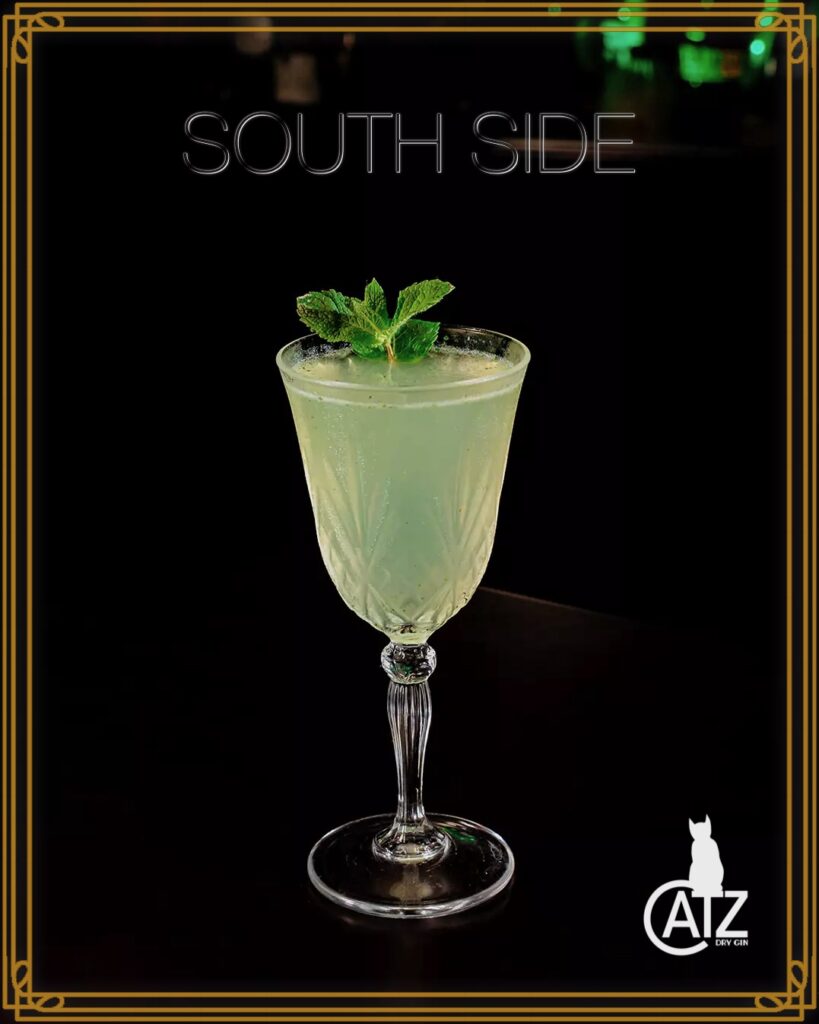
The South Side has its origins in the speakeasies of Chicago in the 1920s. A time when jazz played late into the night, passwords were whispered, and cocktails had to make an immediate impression. According to the stories, this was the favorite drink of the gangsters from the southern part of the city. Strong gin was combined with fresh mint and lemon—not to mask the drink, but to soften its sharp edges and actually sharpen the senses.
A unique twist on the classic sour, the South Side is both refreshing and refined. Elegant, yet full of character.
CATZ Dry Gin, with its deep flavor and fresh citrus notes, gives this cocktail exactly the structure it needs to shine. Powerful, yet perfectly balanced. Just like its origins.
Ingredients
- 60 ml CATZ Dry Gin
- 20 ml freshly squeezed lemon juice
- 15 ml sugar syrup
- 5–6 mint leaves
- 1 egg white
Method
Dry shake (without ice) to emulsify the egg white.
Shake again with ice.
Strain into a chilled cocktail glass.
Garnish
Top coin
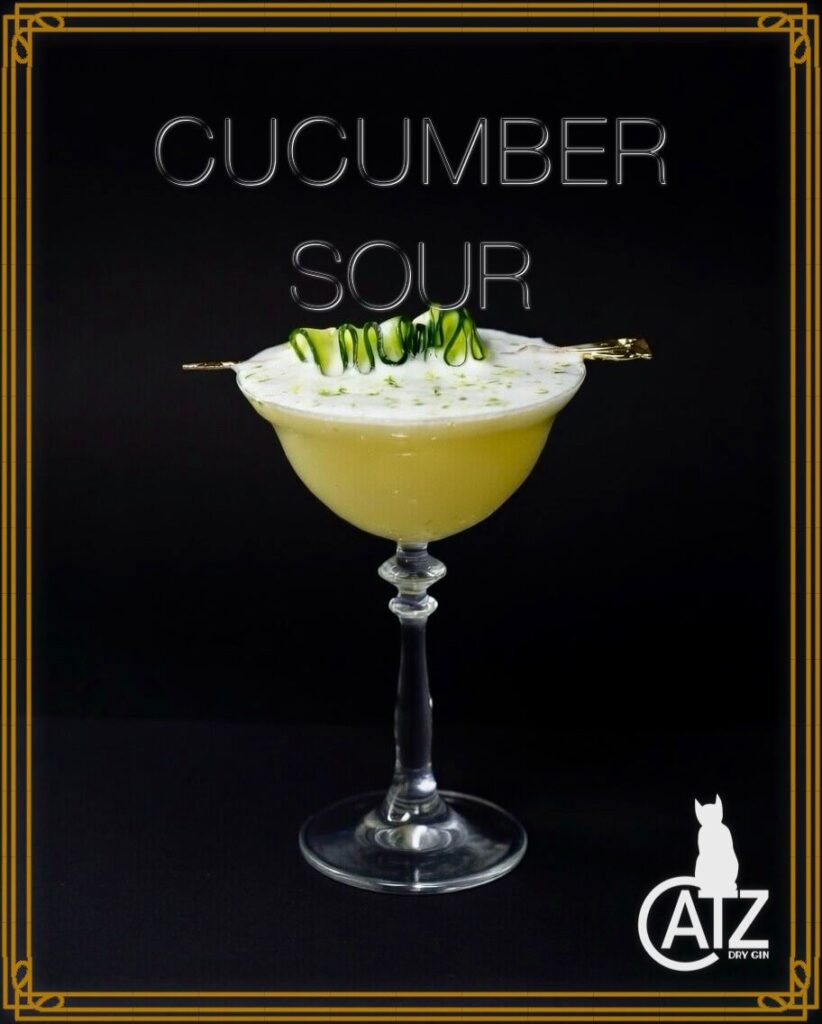
This cocktail is a study in simplicity and balance, perfect for spring. The fresh taste of cucumber provides a cool, crisp quality, while the delicate aroma of elderflower adds a light, floral note. Fresh lemon juice provides a sparkling sharpness that brings everything into balance. Built on the distinctive profile of CATZ Dry Gin, the result is a drink that feels both modern and timeless.
Ingredients
- 50 ml CATZ Dry Gin
- 25 ml freshly squeezed lemon juice
- 20 ml elderflower liqueur
- 3 slices of cucumber
- 3 ds vegetable protein
Method
Dry shake (without ice) to emulsify the egg white.
Shake again with ice.
Strain into a chilled cocktail glass.
Garnish
Thin strips of cucumber

Rooted in the grandeur of 19th-century America, the New York Sour is reinterpreted here with a lighter, more contemporary twist. The robust body of whiskey gives way to the crisp profile of gin, where citrus and delicate botanicals come together in perfect balance. The result is a cocktail built on contrast: lively and refreshing at its core, deep and velvety on the finish.
At the heart of this cocktail is CATZ Dry Gin, which lends it clarity and precision. Fresh grapefruit adds vibrancy and elegance, while a subtle float of red wine provides both visual flair and a refined depth.
Ingredients
- 50 ml CATZ Dry Gin
- 30 ml freshly squeezed grapefruit juice
- 15 ml Sugar syrup
- 20 ml egg white
- 15 ml Red wine
Method
Dry shake (without ice and without the red wine.)
Shake again with ice.
Double strain into a rocks glass filled with ice. Carefully pour the red wine over it.
Garnish
none

A cocktail that’s all about color and experience. Deep orange in the glass, sparkling in character, and inextricably linked to moments of togetherness. From the lively streets on King’s Day to the excitement and pride of the Dutch national soccer team, this creation captures the essence of the “orange spirit” in every sip. Aperol contributes its refined bitters and soft orange notes, while fresh mandarin provides a rich, round, and almost velvety citrus profile. The result is a harmonious blend where freshness and depth meet, supported by the elegant base of CATZ Dry Gin. Truly a party favorite!
Ingredients
- 40 ml CATZ Dry Gin
- 25 ml Aperol
- 25 ml fresh mandarin juice
- 15 ml Fresh lemon juice
- 15 ml Sugar syrup
- 20 ml egg white
Method
Dry shake (without ice)
Shake again with ice.
Double strain into a Nick & Nora glass.
Garnish
Orange peel or a thin slice of mandarin.

Inspired by Nathan Howard’s modern creation, this interpretation explores the interplay between freshness and warmth, where vibrant citrus meets layered spices and green, aromatic notes. The name pays homage to the historic spice routes, where unique botanicals and ingredients connected cultures, flavors, and rituals across continents.
This version features CATZ Dry Gin. The botanical base blends effortlessly with the warm spiciness of cinnamon. Basil provides a fresh, green note and adds a refined, almost culinary dimension that continues to develop with every sip. The result is a cocktail that opens with a fresh and inviting flavor, transitions into a spicy and rounded mid-palate, and finishes with an elegant, spicy aftertaste that lingers pleasantly.
A cocktail that feels both contemporary and timeless, striking a perfect balance between precision and character, and between simplicity and depth.
Ingredients
- 50 ml CATZ Dry Gin
- 20 ml fresh lemon juice
- 15 ml cinnamon syrup
- 4 basil leaves
- 1 dash of orange bitters
Method
Gently crush the basil leaves to release their aromas.
Add all the ingredients and shake with ice.
Double-strain into a chilled coupe glass.
Garnish
A basil leaf and a light spritz of orange zest.

As the first mild spring evenings arrive, the Spring Fizz captures the season in a single glass. A cocktail in which the fresh botanicals of CATZ Dry Gin blend with the refined citrus character of yuzu sake, refreshed by the sparkling vibrancy of Sicilian lemonade. Topped with a silky-smooth lemon foam, the result is a cocktail that is exceptionally refreshing, with an elegant and refined finish.
Ingredients
- 30 ml CATZ Dry Gin
- 20 ml Yuzu Sake
- 100 ml Fever-Tree Sicilian Lemonade
- Citrus Foam
- Ingredients for the foam:
• 200 ml Boiron Ambiant Lemon:
• 100 ml apple juice:
• 100 ml lemon syrup:
• 100 ml egg whites
Prepare in a Kidde (whipped cream siphon) with 1 gas cartridge.
Method
Pour the CATZ Dry Gin, yuzu sake, and Sicilian lemonade over ice in a highball glass. Top generously with a layer of lemon foam.
Garnish
None

Cairo, 1942. Tensions were running high—and not just figuratively. In the Long Bar at the Shepheard’s Hotel, bartender Joe Scialom faced a challenge: British officers suffering from severe hangovers caused by low-quality alcohol and the scorching desert heat.
His solution? A refreshing mix of gin, cognac, lime juice, bitters, and a splash of ginger beer. Refreshing, hydrating, and surprisingly smooth. The cocktail was an instant hit. Officers swore by it and gave it the name “The Suffering Bastard” —a name that became just as unforgettable as the cocktail itself.
What began as an improvised concoction evolved into a classic cocktail from the war years and later became a global favorite with a distinctive character.
CATZ Dry Gin brings strength and clarity to this classic. The rich botanicals add depth and a refined spiciness, with just enough character to honor the origins of this iconic cocktail.
Ingredients
- 50 ml CATZ Dry Gin
- 30 ml cognac or brandy
- 15 ml fresh lime juice
- 2 dashes of Angostura bitters
- Top it off with ginger beer
Method
Shake all the ingredients, except the ginger beer, with ice.
Pour into a Collins glass without straining.
Top with ginger beer.
Garnish
A sprig of fresh mint. Optional: a slice of orange for a fresh citrus note.

The Tuxedo was created in the late 19th century at the exclusive Tuxedo Club in New York. This elegant cocktail is a refined evolution of the Martini, enriched with European influences. The addition of maraschino liqueur and a subtle hint of absinthe makes it distinctly aromatic, full of character, and uncompromisingly stylish.
Named after the iconic evening wear that redefined modern elegance, the Tuxedo is more than just a cocktail. It’s a statement. Crafted for those who appreciate balance, finesse, and just the right amount of drama in the glass.
While the original recipe was made with Old Tom Gin, the Tuxedo takes on a bolder and more modern character with CATZ Dry Gin. The rich botanicals and spicy citrus base give this classic cocktail more depth, excitement, and a contemporary twist.
Ingredients
- 30 ml CATZ Dry Gin (as a substitute for Old Tom Gin)
- 30 ml premium dry vermouth
- ½ bar spoon of Maraschino (Luxardo)
- ¼ bar spoon of absinthe
- 3 dashes of orange bitters
Method
Stir all the ingredients with ice in a mixing glass.
Strain the cocktail into a well-chilled martini glass.
Garnish
A cocktail cherry and a twist of lemon zest

The Vesper is more than just a cocktail—it’s a cinematic legend. First ordered by James Bond in *Casino Royale* (1953), this cocktail was crafted to meet his exacting standards: powerful, elegant, and uncompromising.
Named after Vesper Lynd, the spy who left a lasting impression. The cocktail combines gin, vodka, and Lillet Blanc into a clear, layered blend that’s just as distinctive as the man who made it world-famous.
CATZ Dry Gin takes center stage here. Its bold botanicals and smooth finish give the Vesper the structure and depth this cocktail deserves. Because a drink like this doesn’t whisper—it speaks.
Ingredients
- 45 ml CATZ Dry Gin
- 15 ml vodka
- 7.5 ml Lillet Blanc
Method
Shake all the ingredients with ice.
Strain into a chilled cocktail glass.
Garnish
Squeeze some lemon zest over the cocktail.

The Cloud Lily is a modern take on the famous Water Lily, a cocktail that traces its origins to New York’s influential craft cocktail renaissance. Inspired by the refined balance of gin, citrus, and violets, the addition of egg white elevates this creation to a lighter and more elegant level. The silky-smooth texture and airy foam create a cocktail that is both visually enchanting and perfectly balanced.
Ingredients
- 45 ml CATZ Dry Gin
- 22.5 ml Cointreau
- 22.5 ml Blue Curaçao
- 22.5 ml fresh lemon juice
- 15 ml of egg white
Method
Add all the ingredients to a shaker and shake vigorously without ice.
Add ice and shake again until the cocktail is well chilled.
Double strain into a chilled coupe glass.
Garnish
A delicate edible pansy or a twist of orange.